

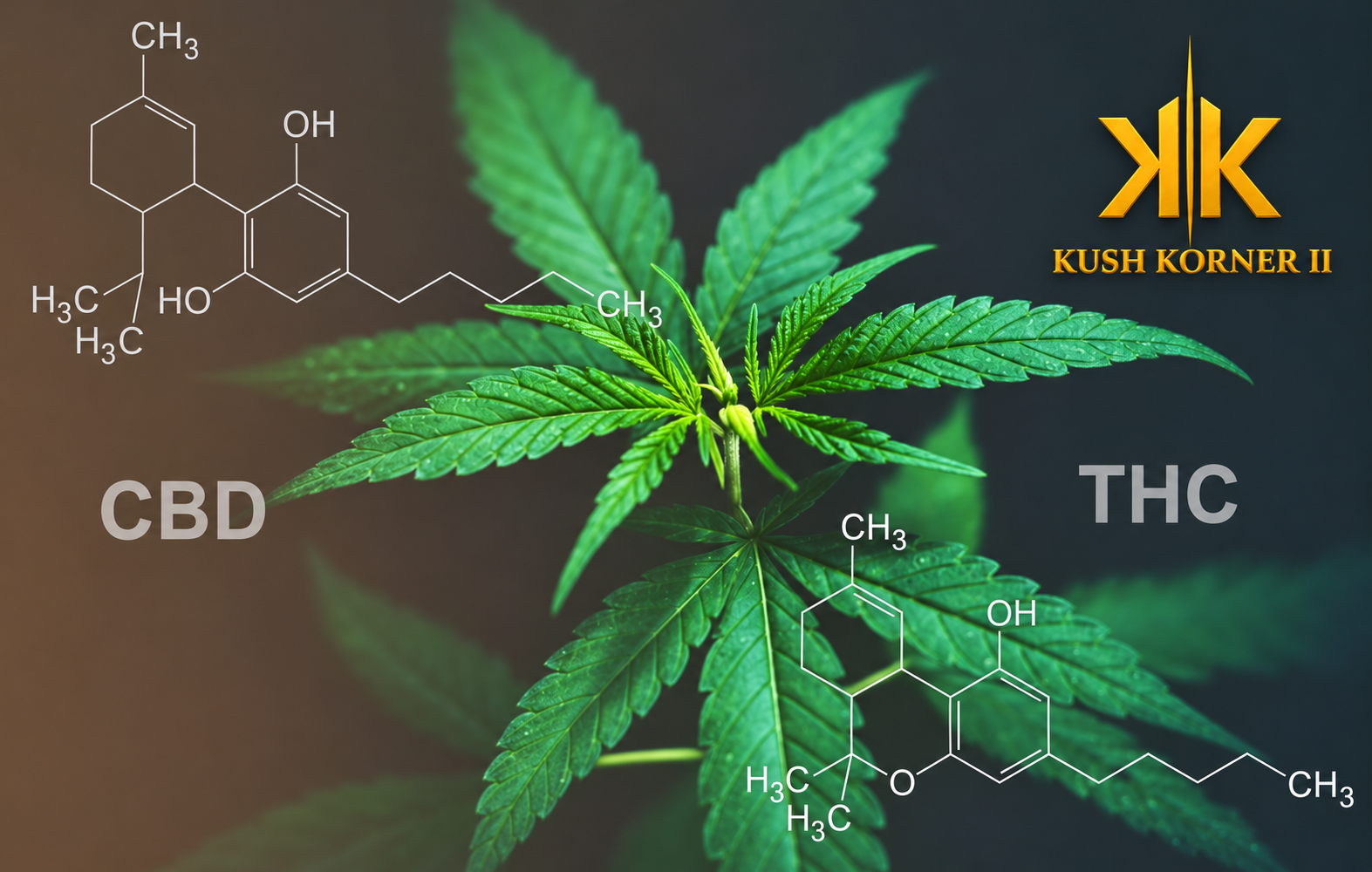
CBD VS. THC:
WHAT’S THE DIFFERENCE?
Understand the key differences, decode product ratios, and learn what to check on the label before choosing your next product.
CBD vs. THC: the short answer
CBD (cannabidiol) and THC (tetrahydrocannabinol) are cannabinoids found in cannabis. THC produces the intoxicating high associated with cannabis. CBD does not produce that same high, but it can still have side effects and interact with medications.
The useful shopping question is not simply which one is better. Look at the amount of each compound, the serving size, and the type of product. A product described as CBD-focused can still contain THC.
| Question | CBD | THC |
|---|---|---|
| Typical THC-style high? | No | Yes; intoxicating |
| Can have side effects? | Yes | Yes |
| What should I compare? | CBD and THC amounts, serving size, and testing | THC and CBD amounts, serving size, and format |
| Is it a treatment guarantee? | No | No |
What is CBD?
Cannabidiol is one of the compounds naturally present in cannabis. It is often described as non-intoxicating because it does not cause the characteristic THC high. That description does not make every CBD product risk-free.
CBD can cause drowsiness and other adverse effects. FDA also identifies medication interactions and potential liver injury as concerns. If you take medicines or want to address a health condition, speak with a qualified clinician rather than relying on a retail product description.
What is THC?
Delta-9 THC is the main intoxicating compound in cannabis. It can alter perception and impair attention, coordination, memory, and reaction time. Effects vary with the amount consumed, product format, and individual factors.
A higher THC number is not a guarantee of a better experience. Read the actual label, avoid driving while impaired, and keep products secured away from children and pets.
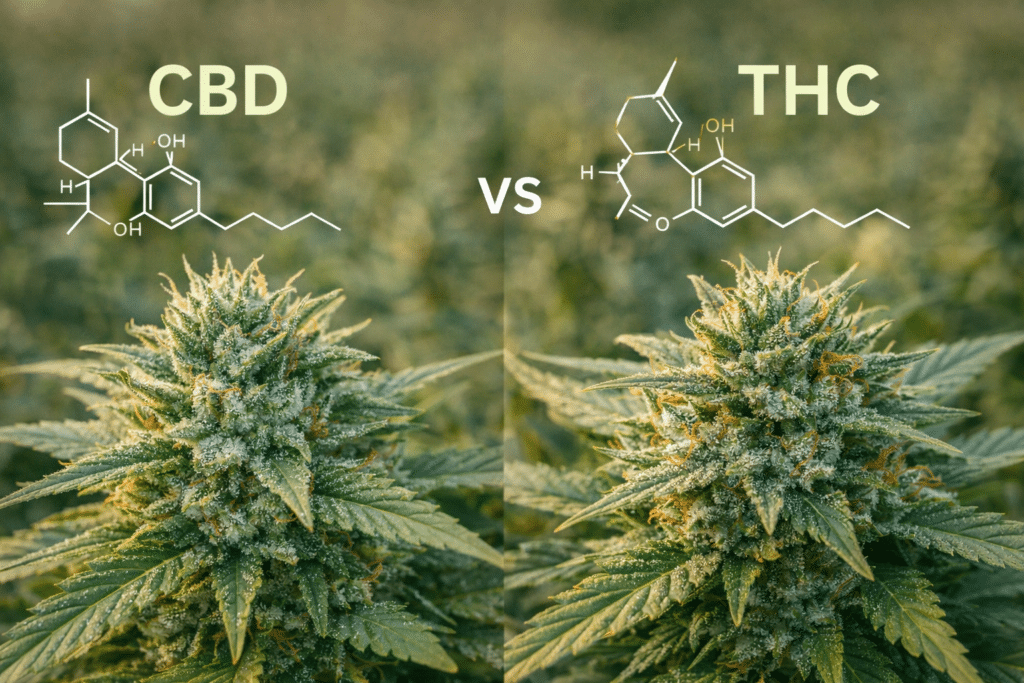
How to read CBD:THC ratios
A ratio compares the relative amounts of two compounds. Always check the order: CBD:THC and THC:CBD describe different things. Then look at the milligrams per serving—the ratio alone does not tell you the amount you are consuming.
For example, 10 mg CBD with 1 mg THC is a 10:1 CBD:THC ratio. So is 100 mg CBD with 10 mg THC, but the second example contains ten times as much of each compound. These are arithmetic examples, not serving recommendations.
What to check on the label
Look for the milligrams of THC and CBD per serving and per package. Confirm how many servings the package contains. Flower may list cannabinoid percentages, while edibles commonly list milligrams; those numbers cannot be compared as though they are the same unit.
For products described as full-spectrum, broad-spectrum, or isolate, check available testing information instead of assuming the description guarantees zero THC. Products marketed as CBD may contain THC, and a CBD label does not guarantee a negative drug test.
Product format matters
Edibles, flower, vapes, tinctures, and topical products are used differently. Do not assume that the same label amount will produce an identical experience across formats. Edible effects can be delayed and unpredictable; follow the package instructions and avoid taking more before the effects are apparent.
Check current availability on our menu. Our team can help explain package information and compare stocked products. Medical decisions, medication interactions, and treatment questions belong with a healthcare professional.
Frequently asked questions
Can CBD get me high?
CBD itself does not cause the characteristic THC high. A CBD-containing product may also contain THC, so check the label and testing information.
Does CBD cancel out THC?
Do not rely on CBD to reverse THC intoxication or make driving safe. A CBD:THC ratio does not guarantee freedom from impairment.
Does a 1:1 ratio mean a low-strength product?
No. It means equal amounts of the two listed compounds. Check their actual milligrams per serving and per package.
Is CBD a proven treatment for every condition?
No. FDA has approved a prescription CBD medicine for specific seizure disorders. That approval does not establish that other retail CBD products treat health conditions.
Can I use CBD with my medication?
Ask your clinician or pharmacist. CBD can interact with medicines, and a budtender cannot determine whether a combination is medically appropriate.
LA Original Since ’07
Read the label. Know your options.
Explore our current selection and ask our team about the cannabinoid information on available products.
5143 Alhambra Ave, Los Angeles, CA 90032
Daily · 10 AM–10 PM
In-store shopping & curbside pickup · (323) 505-7200
Sources & further reading
CDC: About CBD
CDC: About Cannabis
FDA: What to know about cannabis-derived products, including CBD
Educational information, not medical advice. Avoid cannabis, including CBD, during pregnancy or breastfeeding. Do not drive while impaired. For adults 21+ and qualifying medical patients 18+ with required documentation. Keep products away from children and pets.